
Background
There is a current national plan on prevention and combating trafficking and protection of victims.
There is also a national plan against forced labour exploitation.
These plans set out federal and state objectives and courses of action. Impact indicators are provided.
An annual situation report is published and current.
Data and information are made publicly available.
There is a hotline for women who are victims of violence which includes human trafficking. A national referral mechanism has not been implemented.
There are specialized counselling centers for victims of human trafficking via the Federal Coordination Circle Against Human Trafficking.
The Service Centre against Labour Exploitation, Forced Labour and Human Trafficking is available for domestic victims.
Germany has complex and diverse supply chains. Currently, one of the current methods of resolution for supply chain labour abuse violations is the Supply Chain Due Diligence Act.
Criminal enforcement against corporations benefiting from exploitation in supply chains is very limited.
Germany’s financial intelligence unit, Zentralstelle für Finanztransaktionsuntersuchungen, does not offer specific information on money laundering of profits but a work stream is mentioned in the annual reports. There is a case study on trafficking in child abuse material in the annual report for 2023.
Some dedicated budgets for funding activities combating exploitation are publicly available and accessible. As the issue is closely aligned with immigration the resources allocated and spent that form a part of relevant ministries, departments and offices are not publicly disclosed and reported.
Other Key Factors
Germany faces immigration and human smuggling challenges and strategies and courses of action relating to human trafficking are linked to departments and agencies responsible for immigration and border control.
Wage theft does occur.
Informal employment is very low.
Freedom of association and collective bargaining is lawful and active.
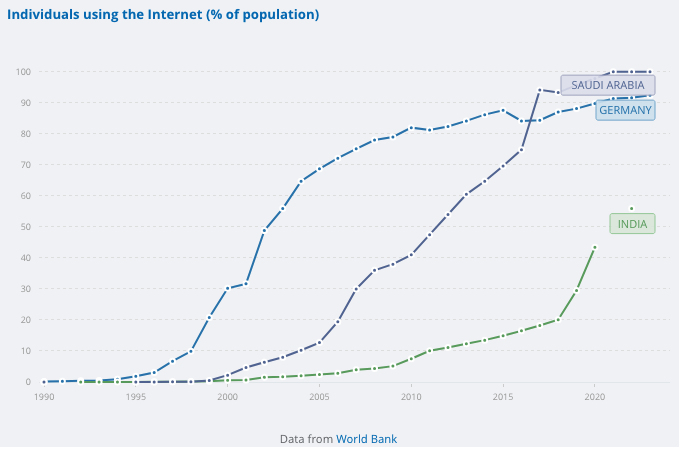
To understand Germany’s situation more fully, we show the percentage of the population using the internet in Germany, along with the highest usage and lowest usage countries amongst the G20 members (Saudi Arabia and India).
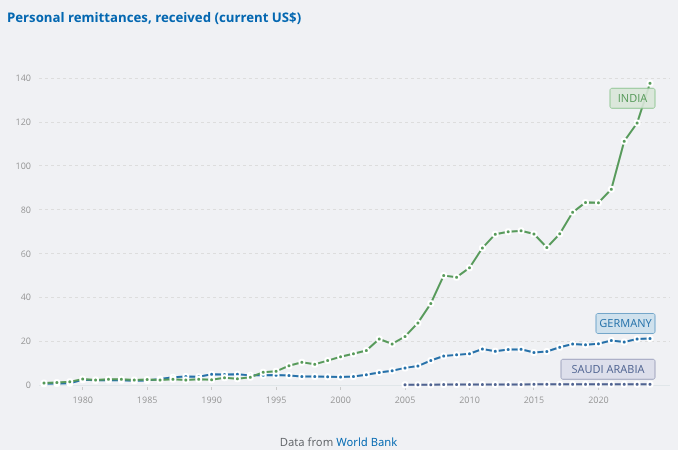
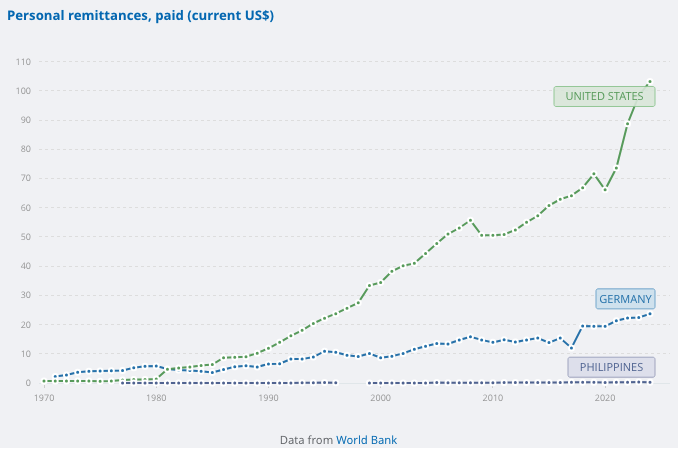
Germany’s remittances are also shown with the respective highest and lowest inflow remittance countries in the G20 (India/Saudi Arabia) and the highest and lowest outflow countries in the G20 (US/Philippines). Keep in mind that remittance estimates are often an under count of actual remittance volume.(Graph unit is in Billion US$)
Germany’s Role in the Global Economy and Its Supply Chains
Trade flows from The Observatory of Economic Complexity. Remittance from the World Bank.